CASE STUDY
How a delivery team avoided redesign and saved 6 weeks
SECTOR: POWER TRANSMISSION
LOCATION: DIDCOT, OXFORDSHIRE, UK
OVERVIEW
Blah blah blah words are cool to write
A UK water company was two years into planning a major infrastructure upgrade when the initial design was rejected. Critical site constraints had been missed, forcing redesign and delaying progress through gate stages.
The project team used Sensat to bring all site information into one shared view, helping them understand risk earlier, align specialists faster, and move the project forward without further redesign.
The project team used Sensat to bring all site information into one shared view, helping them understand risk earlier, align specialists faster, and move the project forward without further redesign.
THE PROBLEM
Late surprises were slowing delivery
The project site sat in a historical coal mining area, creating hidden risks below ground. These risks were known in theory, but difficult to understand in practice because information was scattered across systems.
Project teams were working with:
• Coal Authority data
• Geological surveys
• Underground utilities
• CAD models
• PDFs, GIS screenshots, and shared drives
This made it hard for the PM to confidently explain site risk, slow to get alignment across teams, and easy for critical issues to surface too late.
Project teams were working with:
• Coal Authority data
• Geological surveys
• Underground utilities
• CAD models
• PDFs, GIS screenshots, and shared drives
This made it hard for the PM to confidently explain site risk, slow to get alignment across teams, and easy for critical issues to surface too late.
Ground Investigation Specialist, Tier One Water Company
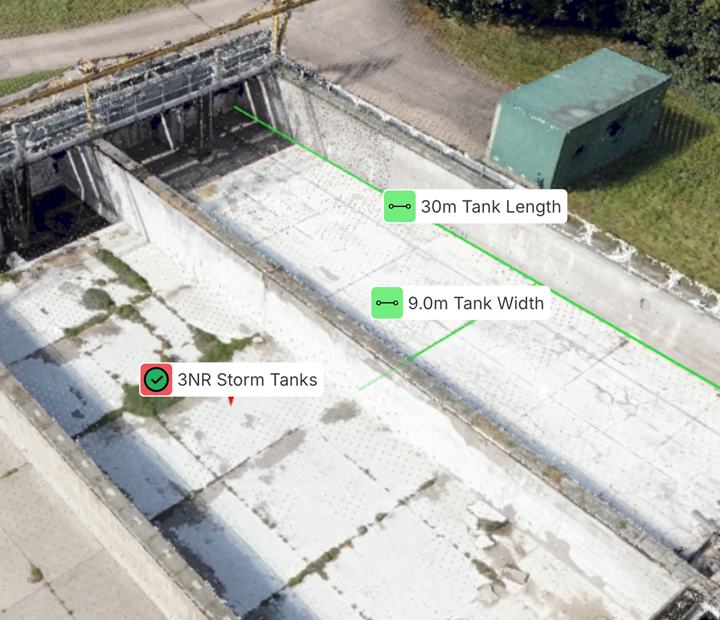
The workaround wasn’t working
Before Sensat, understanding the site meant:
• Long meetings to explain constraints
• Specialists working from different views of the same data
• Repeated clarification and rework
• Designs progressing without shared confidence
• This ultimately led to the initial design being rejected.
• Long meetings to explain constraints
• Specialists working from different views of the same data
• Repeated clarification and rework
• Designs progressing without shared confidence
• This ultimately led to the initial design being rejected.
THE SOLUTION
How Sensat was used
The delivery team used Sensat to bring all relevant site data into a single visual view, overlaid on real-world context.
This included:
• Coal Authority and geological data
• Underground utilities
• Design models
• Topographical and LiDAR surveys
Instead of chasing information, the PM could see and show the full site context in one place.
This included:
• Coal Authority and geological data
• Underground utilities
• Design models
• Topographical and LiDAR surveys
Instead of chasing information, the PM could see and show the full site context in one place.
What changed for the delivery team

Faster alignment
Specialists could point to the same view of the site, making risks easier to explain and decisions quicker to agree.
Fewer redesigns
Designs could be checked against real site constraints earlier, reducing late-stage surprises.
Less admin
Time spent hunting for files, screenshots, and explanations dropped significantly.
Easier sign-off
The PM could clearly show why decisions were made, speeding up approvals.
Overview
The problem
The solution
The results
The result
6 weeks
instead of the typical 3 months to hand back the plans.
Reduced rework
after initial design rejection
Faster progress
through planning stages with fewer blockers
Why this mattered
For the project delivery team, Sensat wasn’t another system to manage. It became the place to understand the site, explain risk, and keep the project moving.
Download the full case study
Want to read this case study offline or share it with your wider team?

Download PDF
Speak to the team and see how Sensat works on a real project site like yours.
Talk to us
Explore other case studies
Case study title goes here
Case study title goes here
Case study title goes here