User Day 2026: from visualisation to intelligence
A recap of our biggest product announcements, five customer stories and our bet for 2027.
Words by Harry Atkinson, Co-Founder & Managing Director
10 November 2026
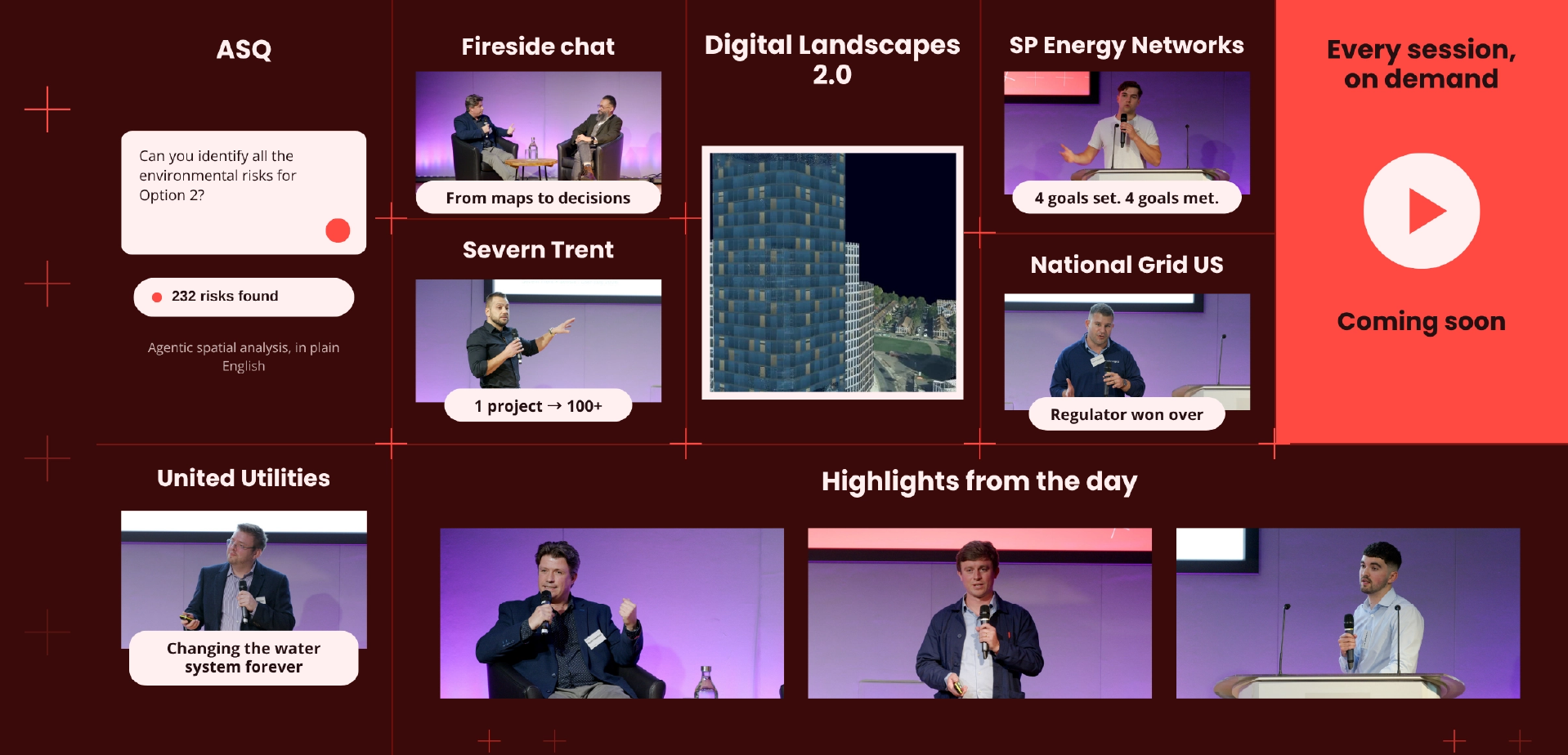
Last week, people from more than 20 organisations, five sectors and two continents came together in Birmingham for our fifth User Day. It was our biggest yet.
Every year, we have more to share. Our product is evolving at pace, our customers are pushing us to think bigger and the challenges we're solving together keep getting more ambitious. That's a reflection of the momentum behind Sensat and the trust our customers place in us.
With this in mind, we made one big bet: by User Day 2027, an agent will be our customers’ most active user of Sensat.
Where it started
In 2022 we had £1,200, four weeks and a simple aim to bring customers together to share their stories with each other and with our team. The result was a short presentation, an open bar and a karaoke party. It felt like a longshot, but it worked.
The customer stories brought the event to life with Mace Dragados presenting HS2 Euston, and H2 Green Steel (now Stegra) presenting Boden. Both are still customers, with thousands of hours of work carried out in Sensat every month.
Four years on, the formula is the same, with a little more finesse.
It’s every Sensateer’s favourite day of the year because it’s where we see our work in use and hear from the people on the ground. Last year on AI snapshot, one of the team exclaimed “Holy sh*t, I didn’t know it was used for that!” after a customer session. Those moments, for customers and for our team, are what the day has always been about.
The biggest announcements from User Day 2026
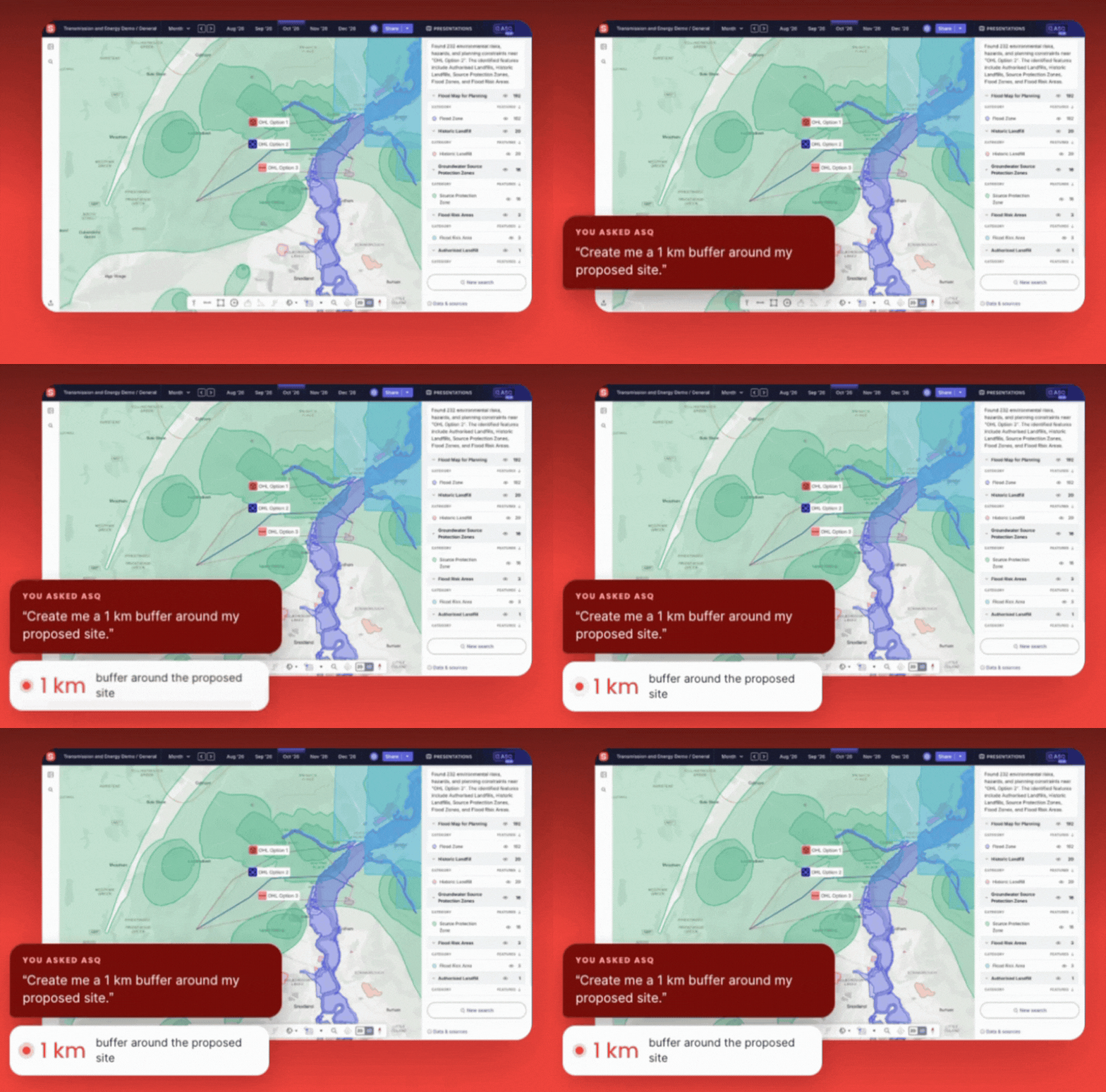
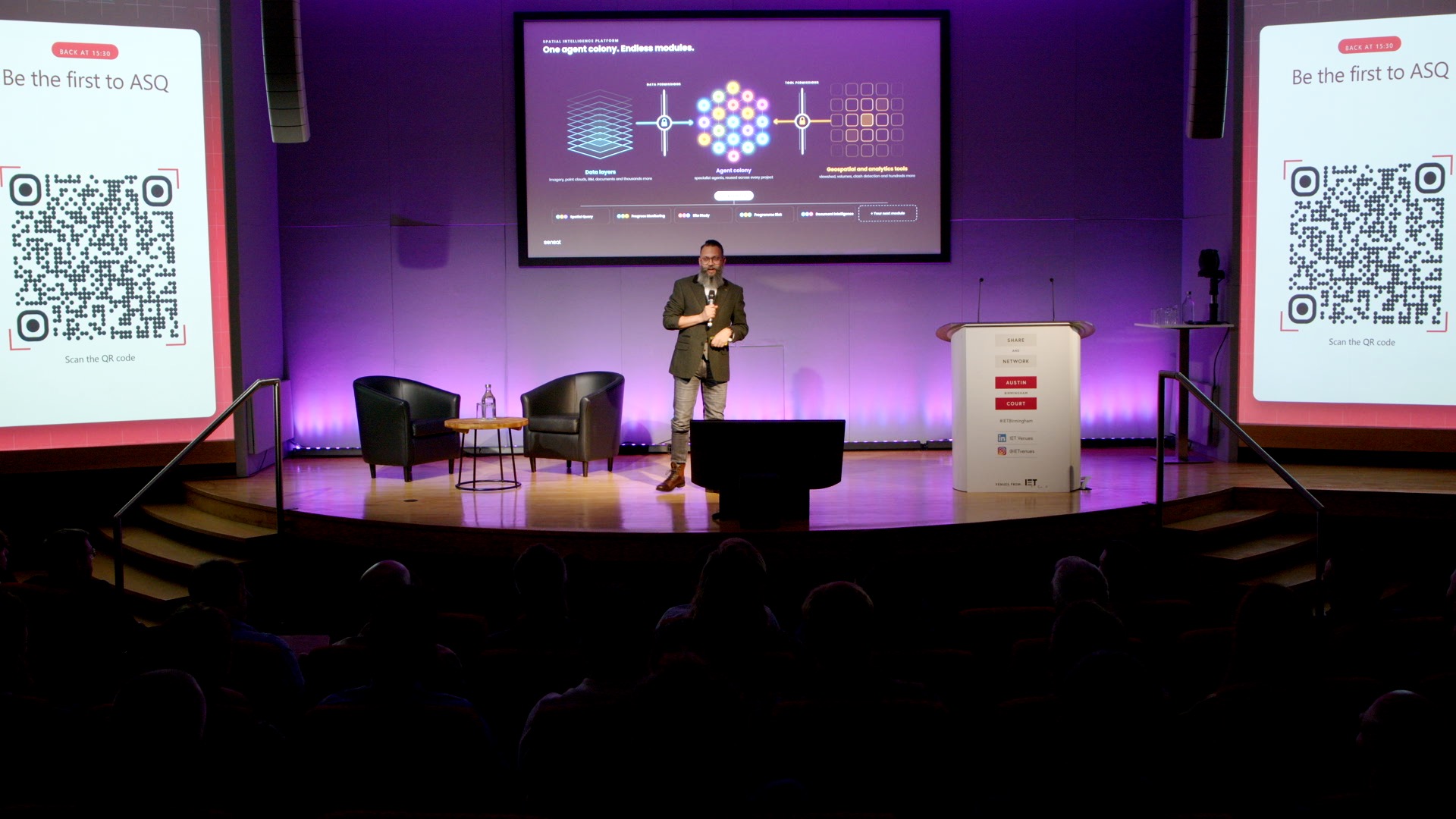
ASQ. Our first agentic AI lets you query all your spatial data in one place. Simply point to a site and ask. ASQ is the foundation for a new way of working with Sensat, shifting from manual tasks to automated analysis and presentation.
Digital Landscapes 2.0. More underlying datasets with new modelling that recreates facades, trees and true ground levels, give you more detail across your whole landscape. It’s the canvas your data sits on and the way you communicate it, and from early 2027 it raises the starting point for every project.
What customers showed us
This year, we heard from five groups of customers across the UK and US.
- Darek Wheatley and Mike Terminiello, National Grid US, showed the different challenges their teams face with permitting and delivery, and how Sensat helps them communicate with local stakeholders and regulators to reduce friction.
- Zak Johnson and Dan Neagu, Severn Trent, explained how Severn Trent is using Sensat across the whole organisation and the benefits realised doing value engineering with Sensat - saving them £7.2 million in total across one scheme.
- David Lamb, United Utilities, gave an inspiring keynote on the changing risks and opportunities for utilities to rethink how their assets are used, including how UU is considering treated wastewater for industrial processes.
My favourite quote: “What we’re talking about here is changing the water system forever.”
- Mateo Del Cura, SP Energy Networks, showed how Sensat is speeding up collaboration and decision-making with their contractor, M Group.
- Ryan Ciesielski, Group Head of Geospatial, National Grid, sat down with Khalid, our CTO, for a fireside chat on moving from maps to decisions and why geospatial only creates value when it’s tied to a business outcome, why people, not technology, are now the real bottleneck to change, and why trust in AI has to be earned and shown.
“It’s not about human[s] in the loop, it’s about human[s] being in the lead.”
Each session will be released on our LinkedIn and YouTube over the coming months. Thank you to all of our speakers.


What we heard
User Day isn’t about patting each other on the back. It’s designed for an open conversation about what’s holding adoption back, as well as what’s working. The same themes came up across the day and at a two-day summit we ran alongside it with one customer’s UK and US teams.
Data is the first lever, and keeping it fed is still a human job. The biggest gap between high- and low-adoption programmes isn’t appetite or tools. It’s data. Sensat delivers most when it’s kept fed with up-to-date information, and that takes a plan for data across the whole project lifecycle. Integrations with systems like Autodesk Forma, Esri and Bentley ProjectWise are critical, but still require internal approval.
Project managers need more support. They’re being asked to roll out more and more technology on top of the day job, often without application specialists alongside them. That puts real pressure on their time and leaves adoption resting on a few people. Adoption works best when leadership backs Sensat as the way a process is run, it’s used live in the meetings that already happen, and teams add their own work so the data stays current.
Start from decisions, not features. Ask project managers what they want from a platform and you get a list of features. Ask what decisions they make and you get a strategy. Some customers are now taking a “comply or justify” approach, where spatial, shared decisions live in Sensat by default and anything else needs a reason. Those reasons then help shape the roadmap.
Pictures win people; surveys prove the engineering. Planning officers, regulators and residents can’t read a design model. Realistic visuals at true scale, including AI imagery like Snapshot, have had an immediate impact on how decisions are communicated. But they need a layer of verification from someone who knows the site, and permitting bodies will rightly want survey-grade reality behind them.
The value lands early. The biggest returns come from decisions made before construction, when change is still cheap and siting, design validation, logistics and stakeholder engagement can have the greatest impact.
What we’ll do about it
At last year’s User Day we made three promises: help you find and share the right data, connect Sensat to the systems you already use and take our first steps into geospatial AI. We delivered all three, with dynamic Workspaces, integrations with Autodesk, Asite and Bentley, and Snapshot, which is already on its second version.
By User Day 2027, an agent will be our customers’ most active user of Sensat. Here’s how we plan to get there.
1. Ask, don’t search. Today, every answer in Sensat still needs someone to go and find it, often across 20 or 30 layers of data. ASQ changes that. Simply point to a site and ask a question in plain English. It’s currently in private beta, with a full launch planned for Q1.
2. Let agents do the set-up. Manually keeping projects up to date is one of the biggest barriers to adoption. Next, agents will take care of more of that routine work in the background, whether that’s sorting a thousand markups overnight, filing 60 project documents in the right place or sending a daily progress update. You stay in control while the agents handle the legwork.
3. Raise the starting point for every project. Digital Landscapes 2.0 arrives in Q1 2027 across the UK and US, giving every project a fuller picture of the real world from day one.
All of this is underpinned by the security standards you need to give it the green light. We’re certified to ISO 27001 and Cyber Essentials Plus, and are working towards SOC 2 to support our US customers.
Next year, we hope to see ASQ take centre stage as customers share how they’re putting it to work. We can’t wait to see how you use it.
More than one day a year
We want these conversations to continue well beyond User Day. Alongside the event, we brought together a transatlantic group from one of our customers for a two-day summit, creating a shared community of practice across their UK and US teams. We’re keen to build on this with more events, both for individual customers and across sectors. If you’d like to host something for your organisation or take part in a cross-sector event, speak to your Customer Partnerships Manager.
User Day 2027 is already in planning and it will be bigger and better than ever.
A big thank you to everyone who joined us and to all our speakers for making the day what it was. We look forward to seeing you again next year.
- Harry