How Severn Trent cut 46% on scheme cost for value engineering, with Sensat

Value engineering, brought in-house
The team had to find savings without stalling delivery or missing regulatory deadlines. Using Sensat, they brought value engineering in-house and re-costed 18 wastewater schemes in two weeks, which usually would have been an 8-12 week consultancy exercise - a 75%-80% reduction.
The capital delivery programme was over budget and unaffordable across most of Severn Trent’s 18 IED schemes
Wastewater treatment assets across Severn Trent’s Midlands catchment needed to be upgraded and each carried permit milestones set by regulators, including the Environment Agency.
Budget overruns would mean going back to the drawing board with external consultants and quantity surveyors. It can take up to 12 weeks to suggest new options with detailed drawings and cost packs ready for review.
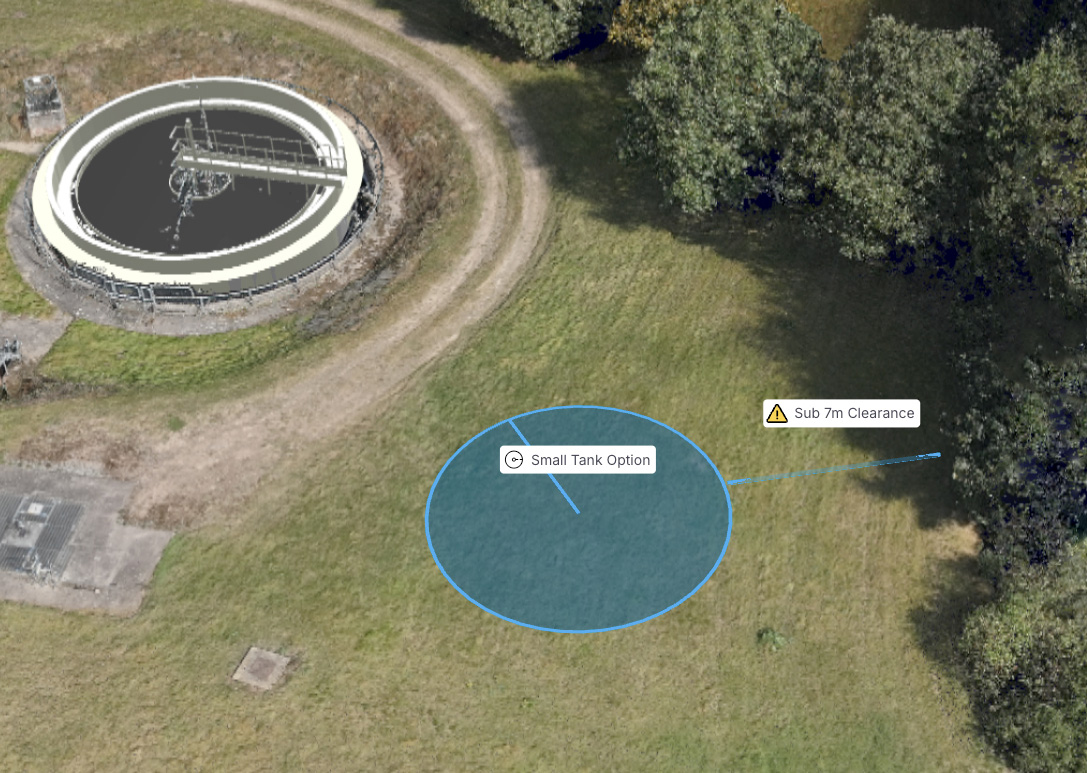
Early reviews on 2D CAD and Google Earth often missed terrain problems, for example steep embankments or tight access. This led to budget increases of £300k-400k on a single project, only after detailed designs exposed them.
All 18 schemes, worked live in one spatial workspace
The team ran the exercise live inside Sensat as a spatial workspace, working all 18 IED schemes from one model, as opposed to the traditional approach of using static slides. This allowed them to:
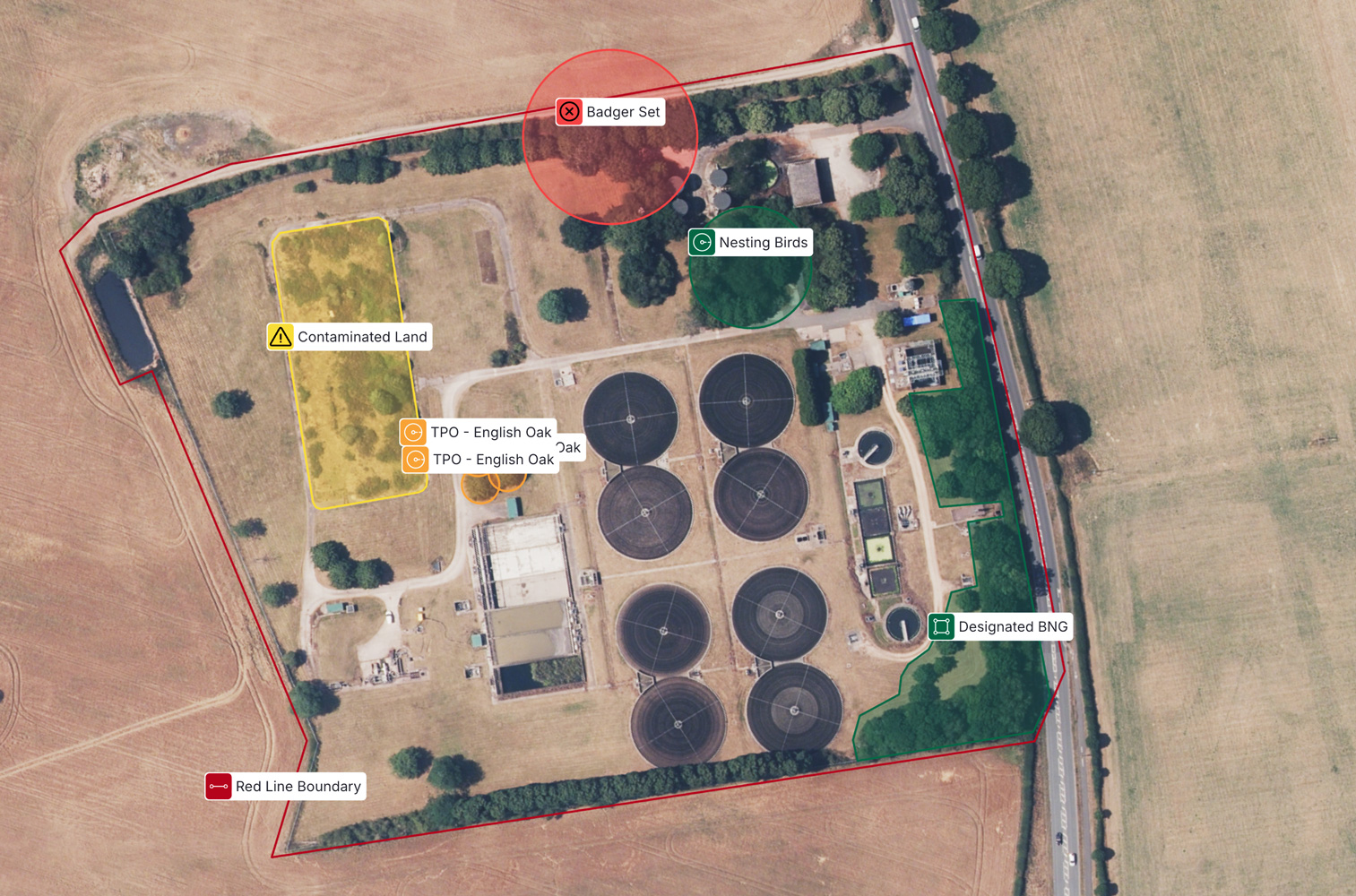
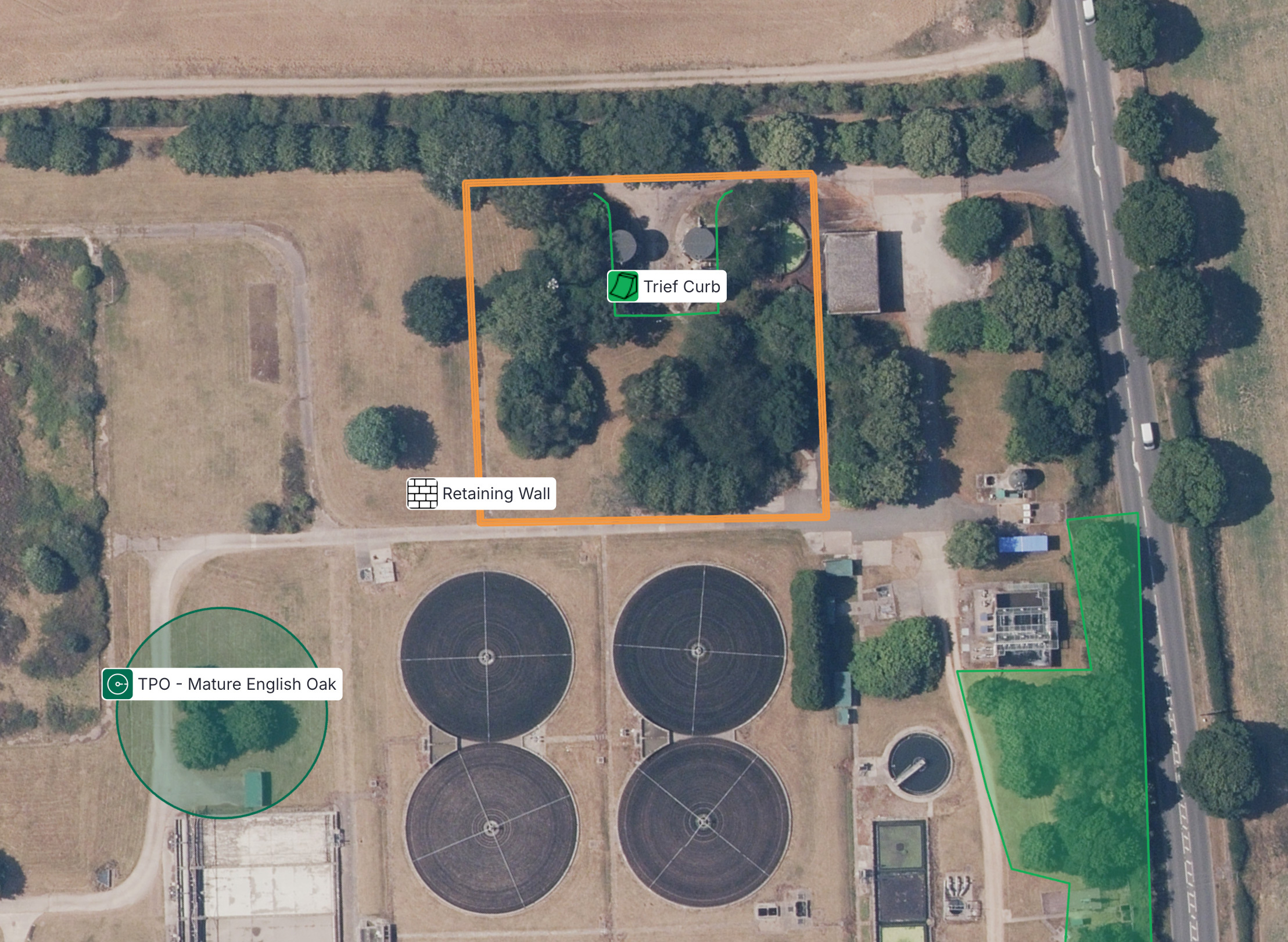
- Identify and condition existing assets: each was assessed and its condition and specific requirements visually marked using the mobile app
- Visually benchmark: original outline designs and contractor VE options were imported into one shared view.
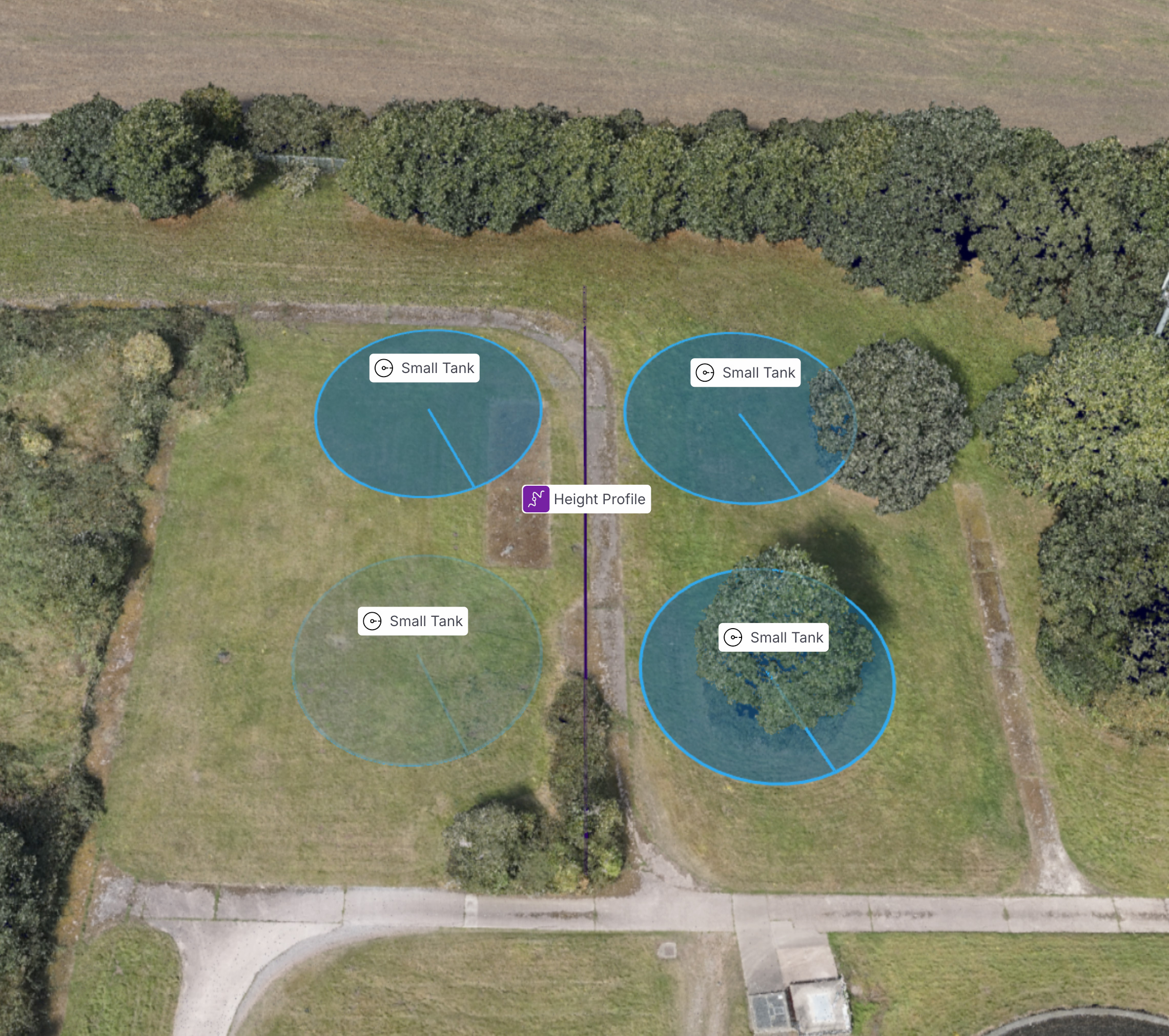
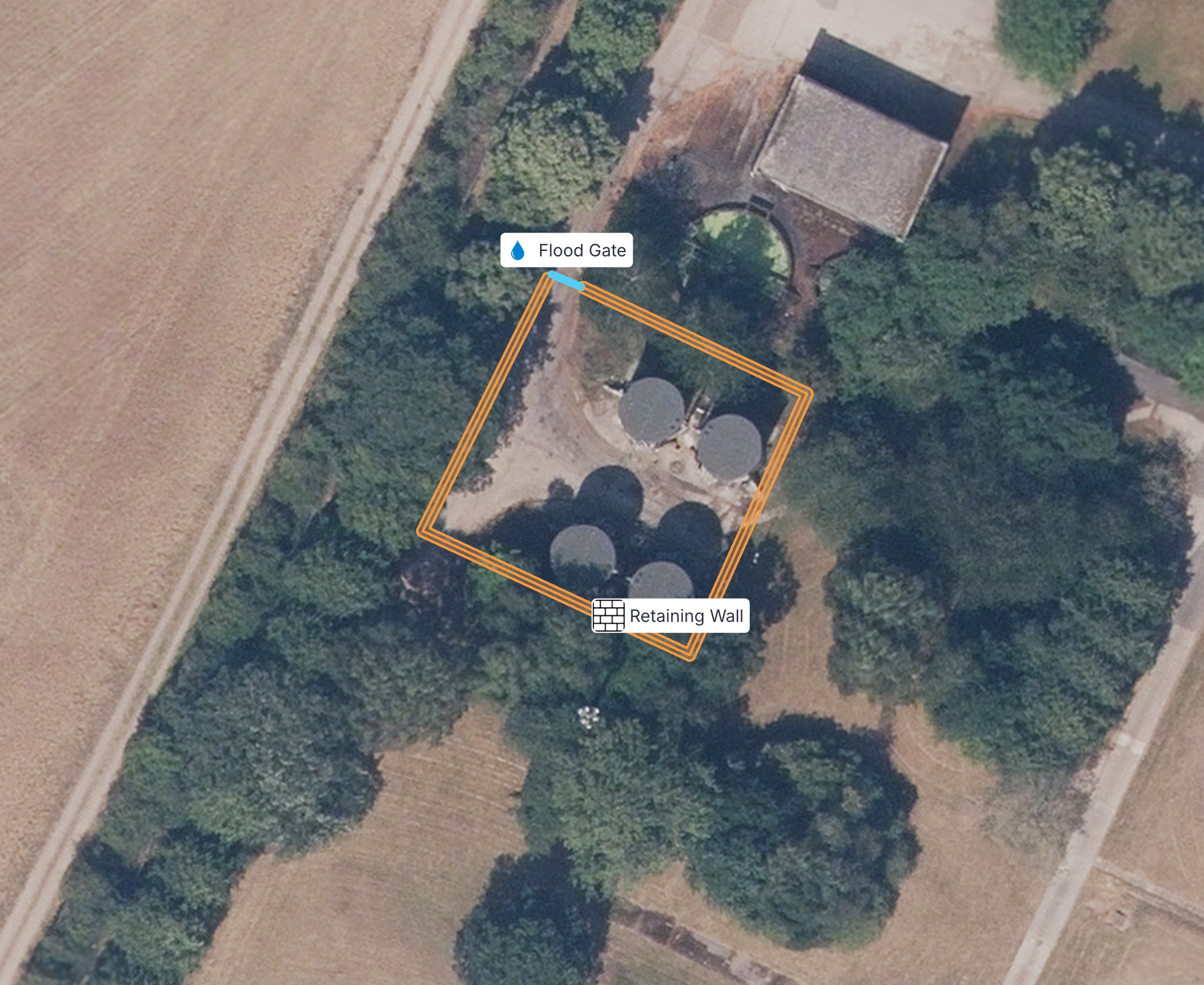
- Sketch live and instantly quantify the changes: revised routes and layouts were drawn on the real site context, with lengths, areas and volumes measured instantly - bypassing manual QS take-offs.
- Cost rapidly: measurements were exported to Excel and combined with contractor unit rates to produce internal estimates in hours, meaning the team was acting as its own Quantity Surveyor.
- Approve designs interactively: options were compared side by side, using Sensat live in group sessions.
Design leads, engineers, QSs, project managers and engineers used the same model, with external design consultants, tier-1 D&B contractors and estimating teams all looking at the same up-to-date site picture and data.
Savings that held, and a programme that kept moving
By reviewing the schemes in-house, massive savings were made including CapEx reductions of £6.2m (46.4%) on Scheme 1 and £1.44m (25.9%) on Scheme 2.
Identifying structural and civil constraints early meant baseline budgets reflected the actual delivery costs, preventing £300k–£400k late escalations that catch teams in detailed design.
Doing the project in-house also protected the operating budget, bypassing £5,000–£15,000+ of consultant and QS fees per scheme and giving design leads back around 20% of their capacity. Because the internal 3D estimates matched what D&B contractors later quoted, the numbers held - keeping schemes inside Ofwat’s PR19/PR24 CapEx allowances.
It also allowed the programme to keep moving - the 18-scheme review took two weeks instead of the usual eight to twelve, recovering about six weeks, when the programme would usually have been on hold. Across the wider 26-project portfolio, roughly 104 project-weeks were saved, protecting the statutory IED milestones the schemes had to hit.
*Scheme-level CapEx figures come from the wider IED programme review that this 18-scheme value-engineering exercise fed into.
Spatial analysis, done by the people who know the sites
Spatial analysis was traditionally something a delivery team would commission out. The platform allowed the people who knew the sites to do the analysis. The usual way takes weeks, but they didn’t have weeks. Bringing the capability in-house changed the shape of the decision rather than just its speed: options could be tested, costed and agreed with everyone who needed to approve them in the same room, against the real site.
Sensat is now used on more than 100 live projects at Severn Trent, across the project lifecycle from concept through to handover - including pre-construction information packages shared with contractors inside the platform rather than by email.