How a Water Company cut CSO storage option selection from weeks to half a day
Rapid CSO optioneering across a large catchment
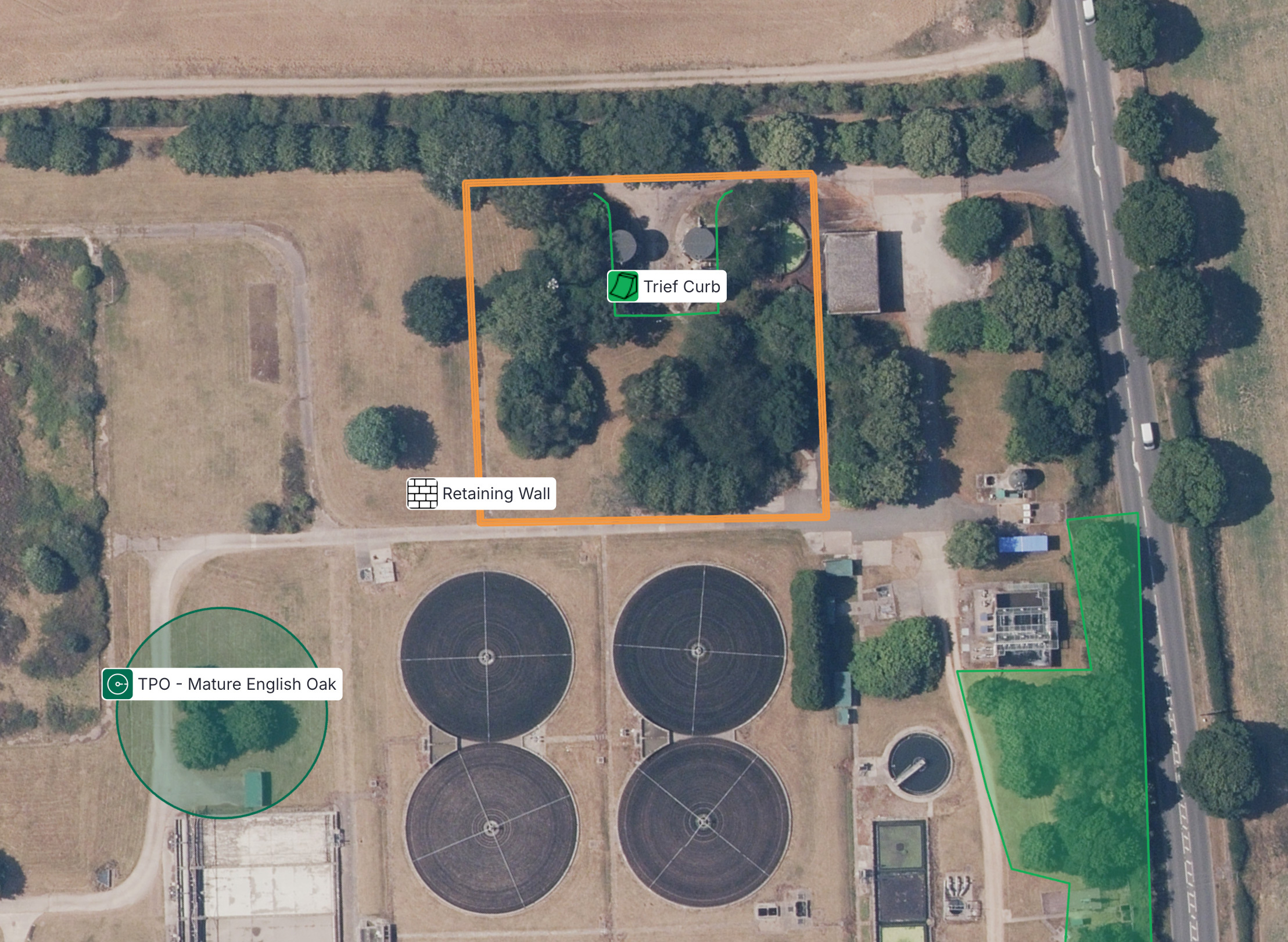
They needed to be able to quickly understand the feasibility of a site, and identified that Sensat would be key for this process. They created a cross-functional team with their internal operations and technical teams, as well as their supply chain partners and members of the Sensat team and brought every candidate site into one shared, real-world view and reduced option selection from weeks to a few hours per location.
Feasibility could only be judged one site at a time
As part of a ~£450m programme to reduce storm-overflow spills, the Water Utility had to site storm tanks across roughly 1,500 candidate locations with an early push to place 400–800 tanks in around 90 days.
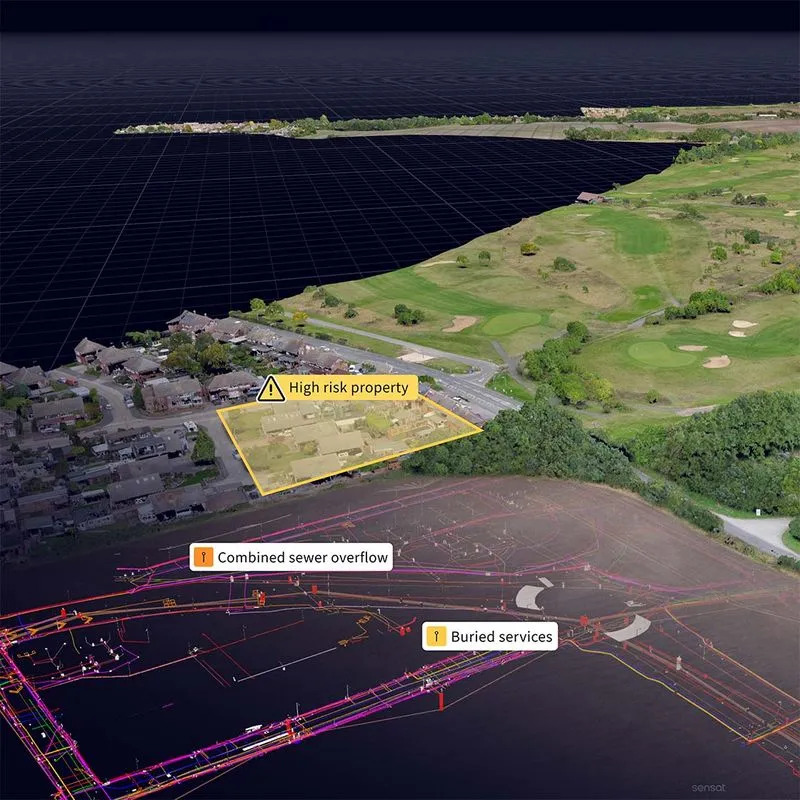
For every location the same questions needed to be answered: geology and ground conditions, topography and constraints, existing assets and buried utilities, as well as reviewing historic and previous surveys. The teams were physically going to site to assess that information, as well as gathering the information from disparate systems, files, and teams - which meant feasibility could only be judged one site at a time.
Specialists spent days on locations that were later ruled out. Site visits were booked before basic viability was clear. Against a fixed target and a 90-day timeline, the slow and manual process was putting the delivery at risk.
One shared view for early option selection
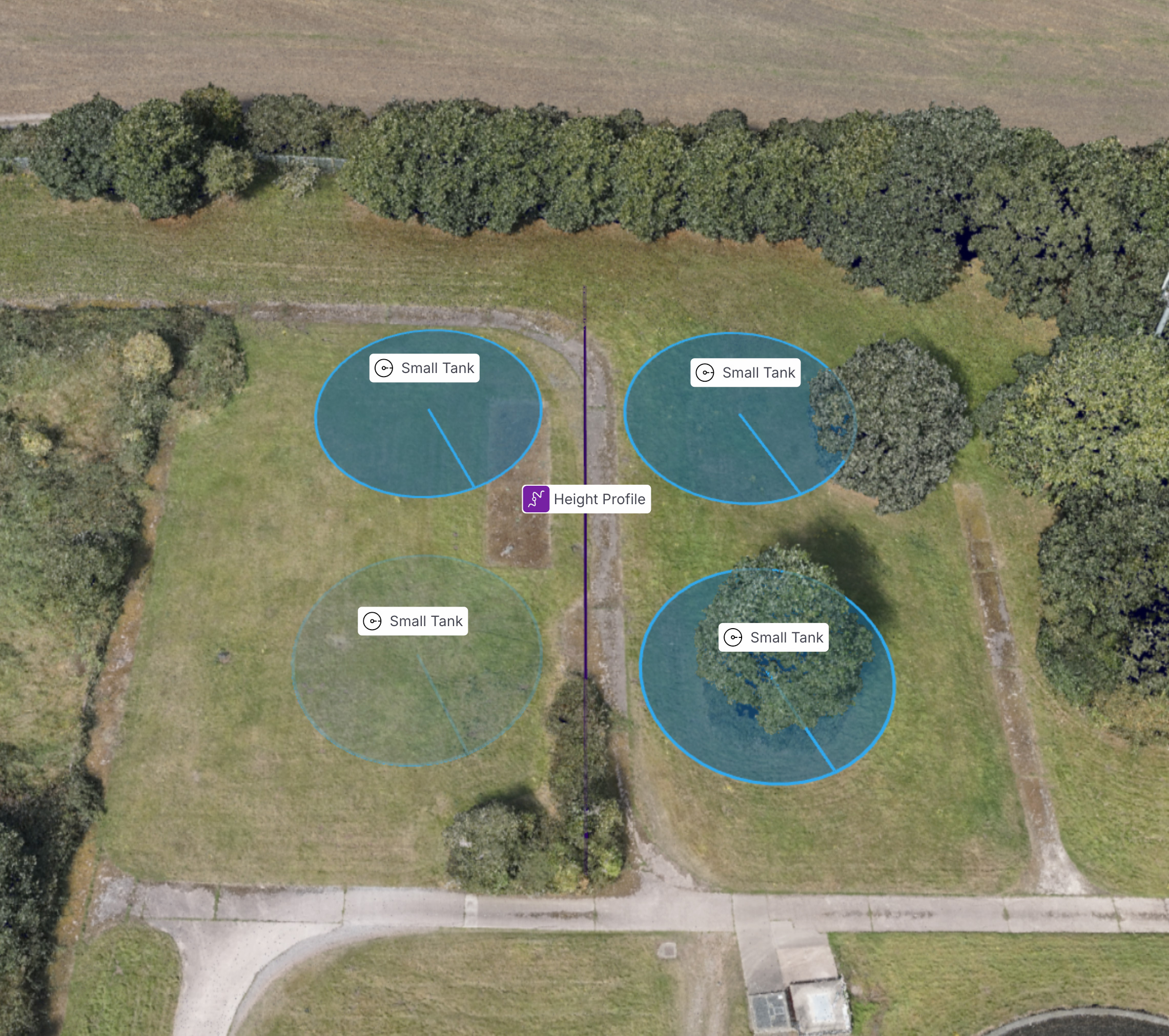
The Water company stood up a single cross-functional CSO team, their own operations and technical teams alongside its supply chain partners. Deploying Sensat gave the team one shared view spanning a ~25,000 km² region - with up to ~30 km² visible at once - and simple 3D models of the storage options laid over the real landscape.
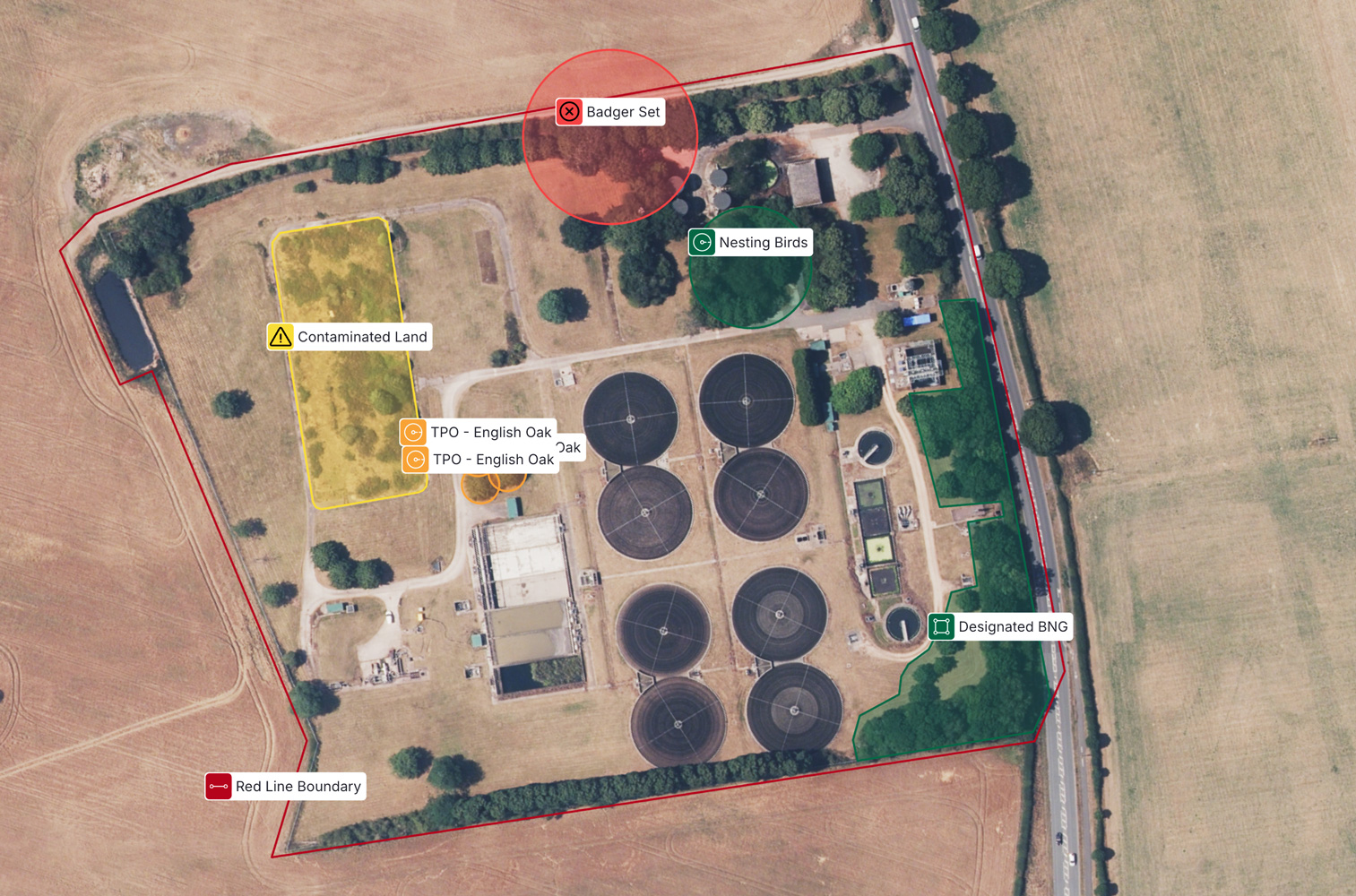
That single view had the geology and ground-investigation data, topography and environmental constraints, existing assets and underground utilities, and different tank sizes and locations for the storage solutions.
This allowed project managers, specialists and tier-1 delivery partners - Avove, Galliford Try and Kier - to all look at the same information, enabling them to compare options side by side and test them against real constraints before sending anyone to site.
Autodesk Forma (formerly Autodesk Construction Cloud) and GIS feeds were pulled into Sensat. Workspaces were organised by site priority and each contractor had a separate workspace. This resulted in onboarding internal teams and contractors taking less than two weeks.

736 sites reviewed in a month
The team reviewed 736 sites in a month - in one case, 93 initial assessments in a single day, reducing CSO planning workflows by 70%.
Removing initial physical site assessments saved an estimated £736,000 and resulted in only genuinely viable sites being visited - meaning specialists’ time was better spent. Improving baseline data also meant fewer late-stage compensation events and contractor variation claims at later stages.